artificial intelligence
HIMSS23
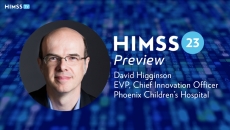
David Higginson, Phoenix Children's Hospital EVP and chief innovation officer, highlights the ways AI algorithms supplement the work of the clinical and operational teams.
HIMSS23
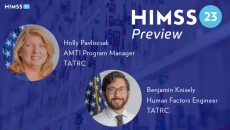
Natural language processing, a type of AI, reviews a massive number of healthcare documents to help two U.S. military health IT experts do their work more efficiently.

HIMSS23
Wendy Paul, medication process architect at Seattle Children's Hospital, and Kyle Longhurst, product manager at Pariveda, preview their HIMSS23 discussion on a discharge medication error quality improvement project.

Artificial intelligence and machine learning bring up questions of transparency, efficacy and safety that boards must face, according to Berkeley Research Group managing director Tom O’Neil.

Karley Yoder, general manager and chief digital officer for ultrasound at GE HealthCare, discusses the company's planned acquisition of Caption Health and why thoughtful integration is important for using AI in healthcare.

Health organizations should deploy AI to automate tasks like appointment scheduling and claims coding, says Kimberly Hartsfield, VisiQuate's EVP for growth enablement.
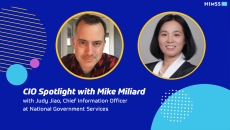
A look ahead with Judy Jiao, CIO of National Government Services, who also gives insights on precision medicine advancements and more.

According to Patty Riskind, CEO of Orbita, positive experiences with self-service chatbots can improve reliance on AI and automation.
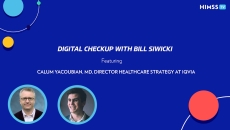
NLP can assist greatly with social determinants of health, real-time clinical decision support, predictive analytics and precision medicine, says Dr. Calum Yacoubian, IQVIA's director of healthcare strategy.
Professors from the Samsung Medical Center explain their work with the South Korean government to transform hospitals into data-driven, research-centered institutions delivering excellent care.