Workflow
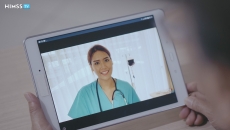
Wendy Deibert, chief nursing officer at Caregility, relays what nurses need to reduce burnout, and how virtual care and technology can supplement tasks to ease nurse fatigue, improve the patient experience and streamline healthcare delivery.

Dr. Adrienne Boissy, chief medical officer at Qualtrics, discusses how healthcare can learn from other industries to ensure high-quality care delivery and boost AI's role in improving overall patient and provider satisfaction.
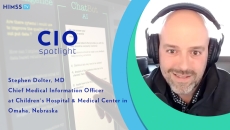
Dr. Stephen Dolter, chief medical information officer at Children's Hospital and Medical Center Omaha, discusses the pros and cons of the evolution of AI in health and where future applications of AI may be useful in the clinical setting.

HIMSS23
Instead of a sick care system, where patients only come in when there is a health issue, predictive and proactive care should be the norm, explains Ran Balicer, chief innovation officer at Clalit.

Chad Peterson, managing director at NetSPI, discusses how care organizations can protect health information by ensuring HIPAA compliance – and what companies can do to reduce vulnerability through reconfiguration.

HIMSS23
Toni Laracuente, SVP and head of Analytics at HIMSS, explains how the HIMSS Community Care Outcomes Maturity Model (C-COMM) helps build the entire picture of underserved patients and gives them the options of virtual care and care in place.
Sam Seering, product manager of Cheers by Epic, relays the benefits of the company's CRM platform, such as enabling providers to serve patients better by leveraging data points and health insights, and automating patient outreach.
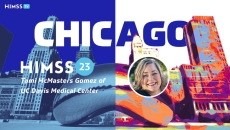
HIMSS23
Tami McMasters Gomez, director of Coding and Clinical Documentation Integrity Services at UC Davis Medical Center, sees automation and AI freeing clinicians from the burdens of coding and documentation.

HIMSS23
Surescripts' focus is on lowering patient costs and improving both quality of care and patient safety, explains CMIO Dr. Andrew Mellin.

HIMSS23
The first product from the health system's department of care transformation and innovation can predict the load of a hospital within 72 hours and then match that load with a clinical team, says Dr. John Doulis.