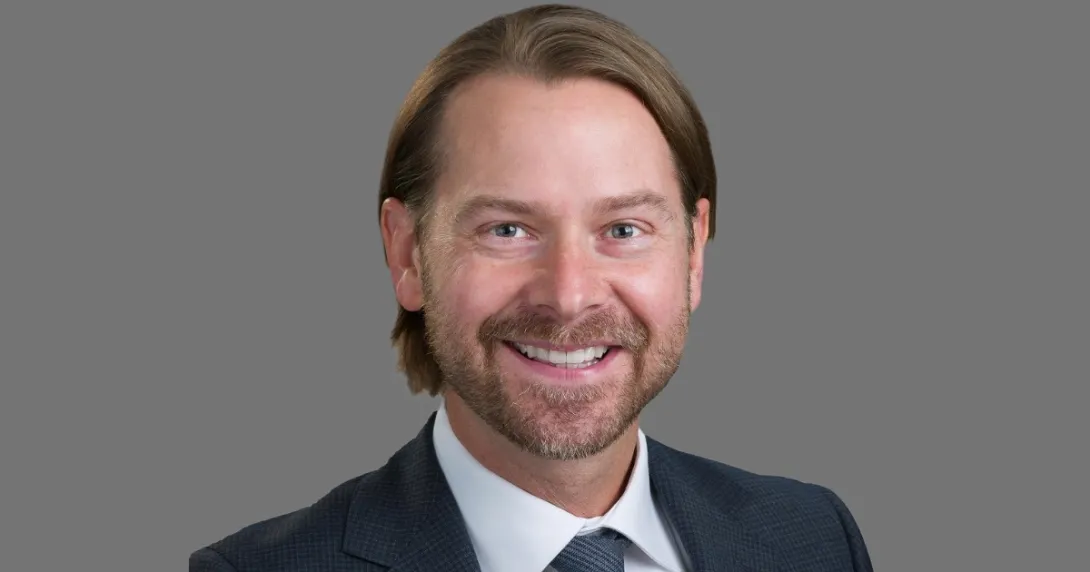
Dr. Dave Newman, chief medical officer of virtual care at Sanford Health
Photo courtesy of Sanford Health
LOS ANGELES – Dr. Dave Newman, chief medical officer of virtual care at Sanford Health, joined MobiHealthNews for an in-person interview to discuss the evolution of virtual care and the growing role of AI and agentic agents in care delivery, particularly in rural America.
MobiHealthNews: Can you tell our readers about Sanford Health and its virtual care program?
Dr. Dave Newman: Sanford Health is the nation's largest rural healthcare provider. We are across seven states. Our land mass is about twice the size of the state of Texas. We have tons of hospitals, tons of clinics, we are an integrated healthcare system. We have our own insurance plan. We serve over two million patients. We've got 4,500 providers, roughly. We've got just about every specialty known to man, and importantly, of our footprint, 99% of it is rural.
MHN: In 2021, Sanford Health was gifted $350 million to advance its virtual care initiative. What's come of that?
Newman: So much has come of that. We have jump-started care in 80 specialties to decrease the ZIP code-based disparities. So, Mr. [T. Denny] Sanford, who gives us the money, he's been right about just about everything in his life, and he said we need to leverage technology to take care of patients in rural America.
So, now we've got a virtual care center, which is based in Sioux Falls, South Dakota, which is a building that houses our operations team. It's also got an education center where we teach clinicians how to leverage digital tools – so how to develop website manner instead of bedside manner.
Twenty years ago, as a med student, I learned how to use a stethoscope. I never use stethoscopes anymore, but I need to know how to be compassionate through a computer screen. We teach classes on that. We have an accelerator space where we can partner with industry and technology companies. If they want to come in and they need patient data, we can help them get their product to market.
We've got spaces where we can test out new products. There are hospital rooms of the future that we can test really cool new products just to make sure they work. And importantly, it also houses an operations team, because you can't get anything done without great operations. The people who have really good ideas, if you don't have support staff, you can't get them to market.
MHN: Where is AI within your whole strategy?
Newman: It's in, like, everything.
MHN: Especially in rural America.
Newman: Absolutely. Yes.
MHN: Do you think that one day we will have AI doctors that are strictly focused on rural America?
Newman: Without a human in the loop?
MHN: Agentic AI doctors.
Newman: Yeah. I think we can do that as long as a human, at this point, is still in the loop. So, if we have an agentic agent ... so we at Sanford, we're using agentic agents now. We have a nurse. Her name is Jane. She's phenomenal. So she calls patients and gets them scheduled for wellness visits. So she's not providing clinical care, but she complements clinical care. As soon as there's a clinical question answered, she might triage that to the appropriate provider, but there's a human in the loop there.
MHN: Recently, Dr. Mehmet Oz of CMS said he thinks that AI avatars are going to be essential to providing healthcare for Americans in rural cities. What do you think about that?
Newman: I think that is going to happen sooner than we think. You have to ask yourself the question, is it better to have no healthcare at all, or is it better to have an AI avatar?
That is how my job came to be. I'm an endocrinologist, so for a lot of my patients, it's not virtual care versus in-person care. It's virtual care or no care at all.
MHN: Where do you think something like medical malpractice would lie in that situation?
Newman: That's a great question. So, if it is a technology company that's providing it without a human in the loop, it would be on the technology company.
How, if they're not affiliated with a system, how could a system be liable for that?
MHN: Do you think we're moving faster than regulation is moving and that could end up being detrimental, or do you think that maybe we are just moving in that direction and we're going to kind of see what happens?
Newman: I think it is the latter. I don't want creativity to be stifled. So, especially in rural America, we innovate out of necessity. Our patients need help, and I want technology to be a big part of that help.
MHN: What do you think about patients who are coming to see providers and they have Googled their symptoms? Do you think that is beneficial?
Newman: I personally do, because I'm going to have a conversation with my patients. I'm a firm believer that AI in the hands of a skilled clinician makes that clinician better, but AI in the hands of a patient is dangerous. It can increase anxiety because they might think that they've got a rare condition that they don't have. But I love when my patient brings in an AI search, or they bring in their symptoms that they've run through ChatGPT, because we can go through it together.
MHN: What does the future of virtual care look like for Sanford?
Newman: So we have been going gangbusters on it. Just last year, we saved patients $40 million in travel costs. So things are finally getting better for patients and providers. But think about this, what if we doubled that? What if we tripled that? We're talking about saving patients $100 million in one year in travel costs.
It's unacceptable now, like, you don't want to go to the store to get a phone charger. You probably can get it delivered to your doorstep within hours. Healthcare needs to be that way. You need to be able to go on your phone, within a couple clicks get the appointment with the psychiatrist when you want it on your terms.