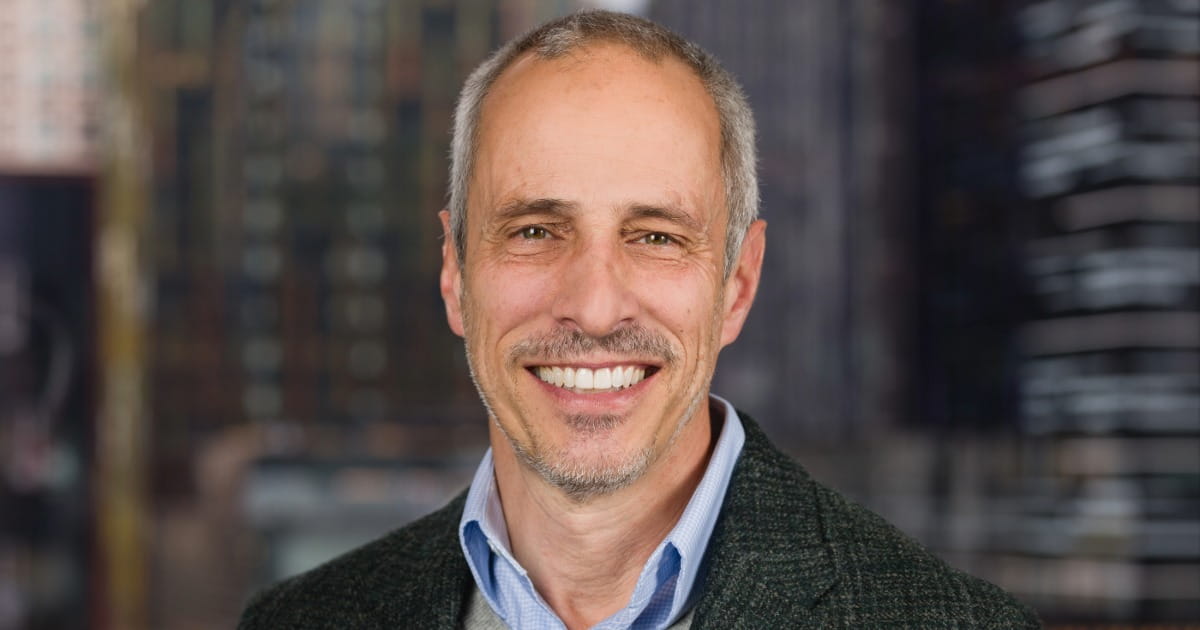
Nathan Tierney, former deputy CIO and chief people officer at the U.S. Department of Veterans Affairs
Photo courtesy of Nathan Eddy
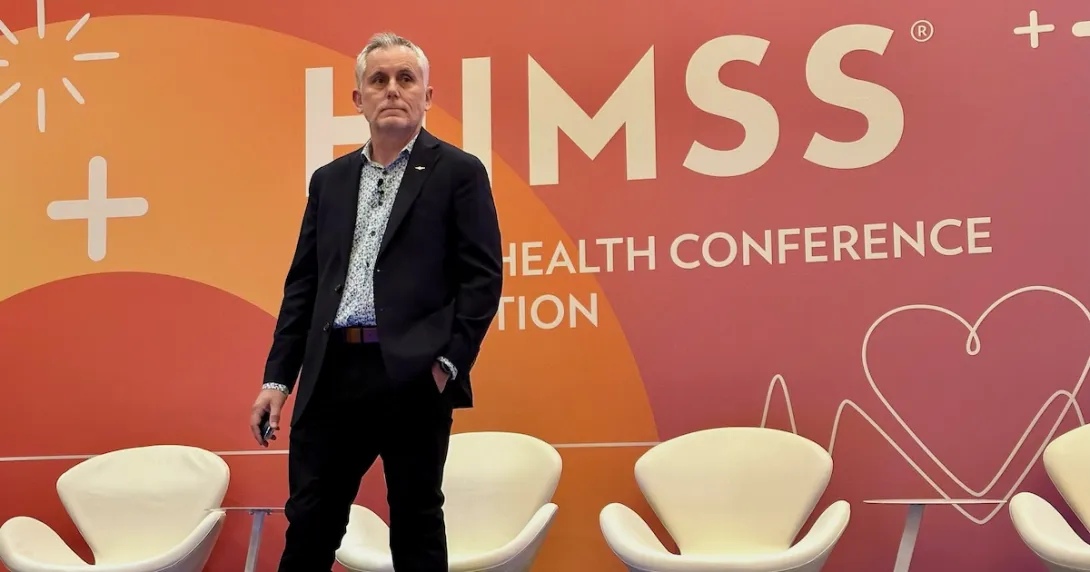
LAS VEGAS – During a talk at the 2026 HIMSS Global Health Conference & Exposition on Wednesday, healthcare executives discussed the process of making critical decisions in an environment defined by constant disruption.
With traditional leadership playbooks often falling short, many leaders are turning to new decision frameworks designed for situations where information is incomplete and the stakes are high.
The session, "Leading Through Healthcare Chaos: How Executives Make Decisions When the Playbooks Fail," Nathan Tierney, former deputy CIO and chief people officer at the U.S. Department of Veterans Affairs, spoke about how healthcare leaders today are operating in an environment defined by constant disruption, where financial pressures, workforce instability, cybersecurity risks and rapid technology change collide.
The result is an environment where leaders must make consequential decisions with incomplete information and constant operational pressure.
Workforce instability, he argued, is often the most visible symptom of deeper organizational challenges. Healthcare organizations frequently attempt to address burnout and staffing challenges by focusing directly on individuals rather than the underlying decision structures shaping the work environment.
"You cannot stabilize the workforce by stabilizing people alone," Tierney said. "You stabilize it by stabilizing decisions."
According to Tierney, leadership models designed for stable conditions tend to break down when organizations face sustained volatility. In those situations, executives often fall into predictable behavioral patterns that unintentionally make problems worse.
One common pattern occurs when organizations substitute motion for decision-making. Meetings increase, activity accelerates and ownership becomes increasingly unclear. While it may appear that progress is being made, the absence of clear accountability leads to confusion and fatigue throughout the organization.
Another pattern emerges when leaders allow compassion to replace clarity. Difficult conversations and performance issues are avoided to protect staff members during challenging times.
Over time, however, standards begin to erode and high-performing employees disengage as toxic behaviors persist.
A third pattern is cultural delay, where difficult decisions are repeatedly pushed to future meetings. In these environments, informal authority structures often emerge, and shadow decisions begin to multiply—sometimes leading to unapproved technology deployments or shadow IT.
"Each of these patterns erodes trust across an organization," Tierney said, noting "decision debt" accumulates when leaders delay addressing complex problems, allowing them to grow more expensive and disruptive over time.
To address these challenges, Tierney outlined a decision-making framework designed for high-pressure environments.
The approach, which he calls "SPAR," focuses on four steps: stop the bleeding, prioritize ruthlessly, act decisively and rebuild smarter.
The first step forces leaders to confront what will deteriorate if no action is taken within the next 30 days. That diagnostic exercise shifts attention toward risks that are actively worsening rather than issues that are merely uncomfortable.
Organizations must then aggressively prioritize initiatives, even when that requires abandoning long-standing projects or "sacred cows."
From there, leaders must clearly define who owns a decision and what changes immediately because of it.
"The real test of a decision is whether clarity increases," Tierney said.
From his perspective, leaders must master the ability to shape the structure and discipline behind how decisions are made, noting that when chaos is environmental, leadership provides that clarity that brings workforce stability.
"We cannot remove volatility from healthcare," Tierney said. "Worry about what you can control, not what you can’t—like removing volatility from how decisions are made."